
By Roy Mathur, on 2022-01-03, at 22:53:31--00:17:39 GMT, for Captain Roy's Rocket Radio Show, Listen
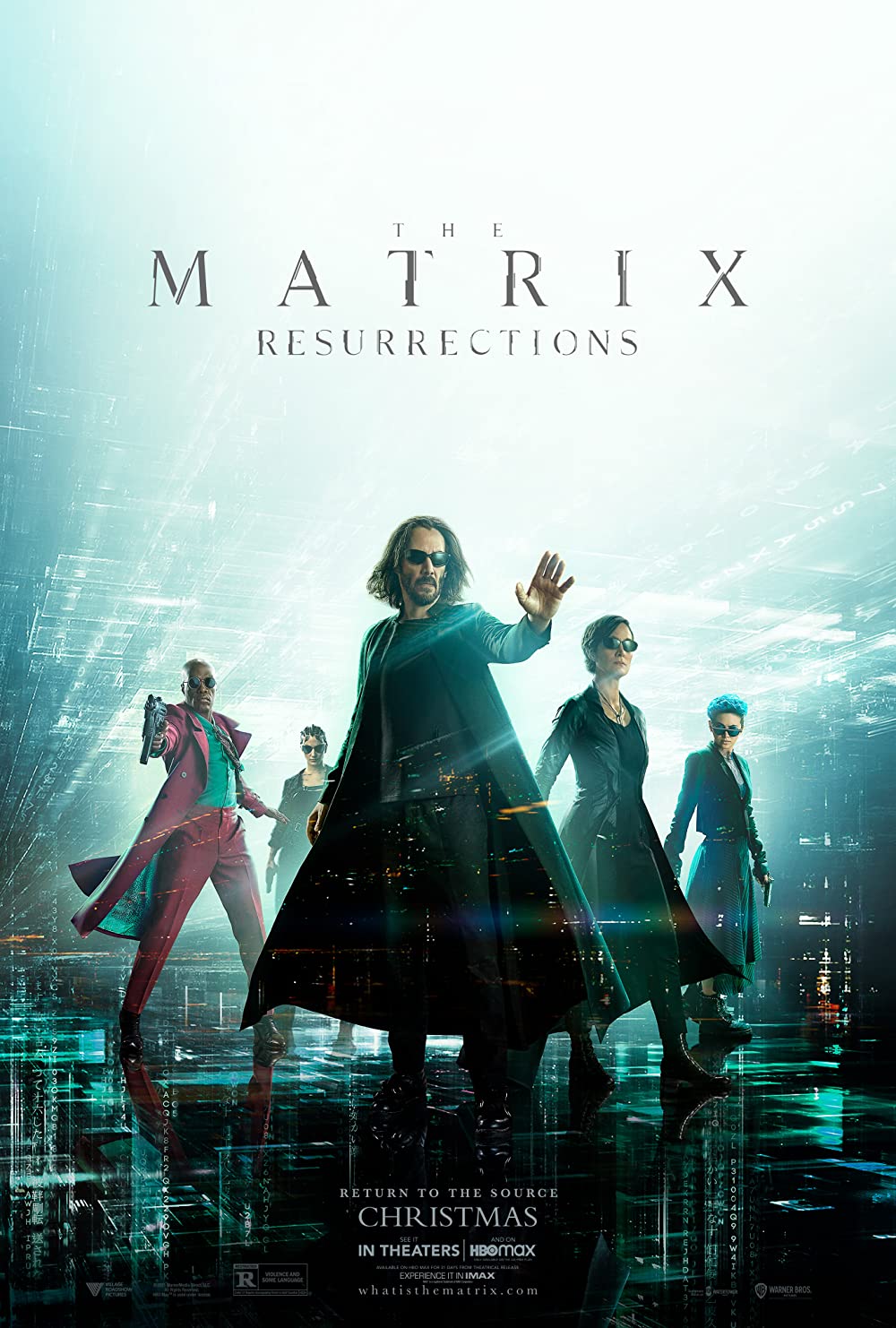
As I previously mentioned, I only managed to watch the first Matrix film of my Christmas Day playlist. However, since that time, I have ground away at the quadrilogy, and I'm finally ready to talk about what I thought of the new film.
I said I was unsure about having guests again, the last one was in 2017, but here I am with special guest, science fiction author Saul Garnell (AKA Doctor Mars). He is joining me tonight to review The Matrix Resurrections.
This blog post of my show notes only contain my own thoughts. For the complete conversation, including Saul's views, please listen to the podcast.
Cast: Neo: Keanu Reeves, Trinity: Carrie-Anne Moss, AI construct of Morpheus: Yahya Abdul-Mateen II, Bugs: Jessica Henwick, et al
Director: Lana Wachowski
Writer: Lana Wachowski, David Mitchell, Aleksandar Hemon
Producer: James McTeigue, Lana Wachowski, Grant Hill
Location: Berlin
Release: UK, December 22 2021
Box Office: From a budget of USD 190M, it made USB 106M
Reception: Average
Here's my very truncated summary of what happens.
In the previous Matrix series, nobody hacker, Neo, is awakened by Morpheus. He is told that the world is a simulation designed to occupy humans stored in battery farms. Their pods produce heat energy that powers the dominant AI civilisation. In the conflict that follows, Neo gets superpowers, gets the girl, Trinity, is badly maimed, loses the girl, but brokers a peace between the last humans and the machines. The Animatrix animated shorts and games like Enter the Matrix, toys, etc. adds to the basic storyline.
In the new film, Neo is plugged back into the Matrix, living as a games developer, oblivious to past events, except for a persistent sense of unease, depression, and delusion. Trinity, revived by the machines, also lives. When the two meet in a coffee shop, they sense a connection.
In the real world, outside the Matrix, sixty years in the future, Bugs rescues an AI construct of long dead Morpheus and awakens Neo. Neo wants to rescue Trinity, but an elderly General Niobe doesn't what to disrupt the peace between the machines and humans in, Io, the city that replaced Zion.
Bugs disobeys, helps Neo enter the Matrix, where they confront exiled programs such as Agent Smith and the Merovingian.
Neo's ex-captor, his psycho-analyst in the simulation; a program called the Analyst (replacing the Architect of the previous series), explains that Neo and Trinity were vital to maintaining the Matrix.
The humans fight AIs, AIs fight AIs, and in a final standoff, Trinity flies away with Neo and tells the Analyst that he has lost.
No colon! No colon in the movie title! Rejoice!
First, regarding the series as a whole, I generally like the films; the beautiful martial arts and Hong Kong gun-fu, bullet time, pushing of effects past breaking point, the outfits, the pervy clubs with the crunching industrial techno take Tech Noir up to a new level, the green tint (I love the palette so much I actually wear green tinted sunglasses; though that is pre-Matrix), the pick'n'mix from the very best sci-fi, the idea that all is an electronic dream; a Gibsonian, though not a consensual hallucination, but an invisible virtual prison.
(In fact, I love William Gibson, but the film adaptations of his novels are terrible. Whereas, while The Matrix series may be an entirely different canon, it neatly encompasses the feeling I get consuming from the general cyberpunk corpus).
In a word, The Matrix movies are cool; cool enough that I know of two old acquaintances who paid over the odds for a Nokia Matrix-style phone after seeing the movie.
Regarding the cast, I enjoyed Yahya Abdul-Mateen II's sort-of Morpheus, though it did not make me miss Lawrence Fishburne any less. I also really liked Jessica Henwick's charismatic and gallant Captain Bugs.
That's the good, here comes the bad.
I lost track of the story. First, it is vitally important that Trinity must not be rescued. Then it is vitally important that she should be rescued.
Balding Neo in the mirror and old Neo failing to fly was funny, but some of the other jokes fall very flat indeed. The meta humour, to the point of knocking down the fourth wall for laughs wasn't funny at all. It was an obviously a passive aggressive attempt to insult the critics and fanbase in advance of negative reviews that they must have known were coming.
The Analyst, Neil Patrick Harris, is supposed to be funny and annoying. He only succeeds in being highly irritating. There is no gravitas present, as there was with the pompous Architect.
It as depressing as the old films in a way that isn't the fault of the creators, this is dystopian fiction after-all, but it sucks that even the new human city, Io, is still underground.
It's long, boring, and silly. I partially blame David Mitchell, the co-writer. He's the novelist who wrote Cloud Atlas; one of the few Wachowski films I actively hate (I even like Speed Racer, so that means something coming from me).
As far as I'm concerned, the Matrix ended with Revolutions. If you are a fan of the Matrix series, by all means see Resurrections for a sense of completion, but if you're like me, you might not feel a warm a glow of nostalgia.